In this article, we'll explore the steps to becoming a remote notary, discuss the benefits of this role, and examine its earning potential. By the end, you'll have a clear understanding of whether this can be an apt side hustle for you. Let's delve right into it.
Traditional Notary Public vs Remote Online Notary
While both traditional notaries and remote online notaries serve the essential function of notarizing documents, there are key differences in how they operate:
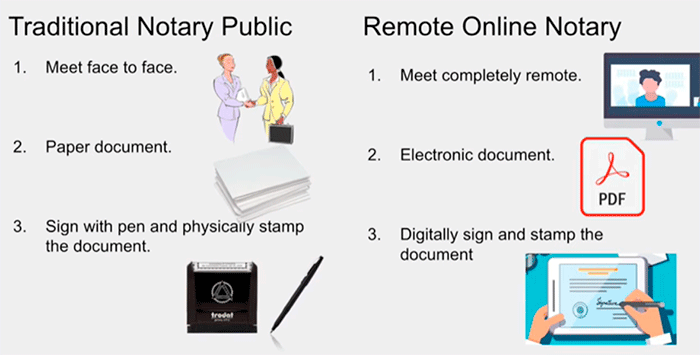
Traditional Notary Public
- In-Person Interaction: Requires physical presence for signing and notarizing documents.
- Geographical Limitation: Services are often limited to a specific locale or region.
- Manual Processes: Involves paper documents, physical stamps, and manual records.
- Limited Hours: Typically operates during business hours with fixed appointments.
Remote Online Notary
- Virtual Interaction: Uses video conferencing for real-time document notarization.
- Expanded Reach: Can serve clients across the state or even the country.
- Digital Processes: Utilizes electronic signatures and digital notary seals.
- Flexible Hours: Offers greater flexibility with the potential for 24/7 service.
In summary, the primary difference between a traditional notary public and a remote online notary lies in their method of service delivery. While traditional notaries require physical presence, remote notaries leverage technology to perform their duties virtually. Each has its own set of advantages, depending on client needs and circumstances.
Steps to Become a Remote Notary
Check Your State's Requirements
Each state has its own regulations for remote notarization. Verify your state's laws and ensure remote notarization is legal in your jurisdiction.
Most states now authorize some form of remote online notarization, but requirements, rollout timing, and extra training still vary. Some states require additional education, while others let already commissioned notaries add RON with fewer extra steps. Always verify the current status in our legal hub before relying on a summary.
- Massachusetts: Online notarizations will be allowed starting January 1, 2024, but notaries must complete required training before performing remote notarial acts.
- California: Remote online notarizations are not permitted until 2030.
- North Carolina: A law enabling remote notarizations takes effect on July 1, 2024.
- District of Columbia: Although a law has been passed to allow remote notarizations, it has not yet been implemented.
Complete Traditional Notary Training
Before becoming a remote notary, you must first be a traditional notary public. Complete the necessary training and certification required by your state. Here are the general steps to follow:
- Complete an application for a traditional notary license with your state.
- Pay the state's filing fee.
- Take an approved notary course (if required by your state).
- Pass the state's notary exam and fulfill any other requirements.
- Obtain your commission certificate from your state.
You might also need to secure a surety bond to protect against potential lawsuits. Ensure you purchase your notary supplies from credible providers.
Add Remote Online Notary (RON) Endorsement
Once you have your traditional notary certification, you can proceed to obtain a RON endorsement. This involves:
- Applying for the RON endorsement from your state, which may involve additional requirements and fees.
- Choosing an approved remote online notarization (RON) platform.
When selecting a platform, ensure it is secure, user-friendly, and compliant with state regulations.
Apply for Remote Notary Authorization
Submit an application to become an authorized remote notary. This may involve additional training specific to remote notarization and passing an exam. Depending on your state's requirements, you might need to provide proof of completing a course or attending a seminar that focuses on remote notarization principles and technology. It's also important to pay any associated fees and ensure that your background check is up-to-date.
Acquire the Necessary Technology
Invest in the required technology, including a secure computer, high-speed internet, and digital tools for notarization. You may also need specific software approved by your state. Essential equipment includes a webcam and microphone for conducting live video sessions, as well as secure digital storage for maintaining records. Make sure your technology setup complies with state regulations concerning security and data protection.
Choose a Reliable RON Platform
Enroll in a Remote Online Notarization (RON) platform that complies with your state's legal requirements and offers robust security features. Research different RON platforms to find one that offers seamless integration with your workflow, provides strong encryption for document security, and includes user authentication methods compliant with regulatory standards. Popular platforms include DocVerify, Notarize, and SIGNiX.
Complete eNotary Training
Many states require additional training specific to electronic notarization. Ensure you understand the procedures, security measures, and technology used. This training will often cover the nuances of digital signatures, identity verification processes, and the use of electronic seals. Completing this training not only helps in complying with state laws but also ensures that you can confidently and accurately perform remote notarizations.
Stay Informed on Regulations
Remote notarization is evolving, and regulations can change. Stay updated on the latest laws and best practices to ensure compliance. Join notary associations, subscribe to industry newsletters, and participate in continuing education programs to keep abreast of new developments. Always monitor your state's official notary department's announcements for any changes that could affect your remote notarization practice.
Benefits of Becoming a Remote Notary
Transitioning from a traditional notary public to being a remote online notary has numerous advantages. The foremost benefit is that you can operate from the comfort of your home. Other benefits include saving on travel expenses, maintaining safety, reducing paper waste, and providing convenient services to the clients. Another significant perk is the increased potential client base as you can serve clients from any part of the world as long as you, the notary, are located in your commissioning state.
Additionally, the ability to provide online notarization sessions extends your reach geographically and operationally. This flexibility allows you to cater to clients who are located in different regions or have limited mobility. Moreover, the digital nature of online notarization ensures efficient record-keeping, streamlines processing, and reduces paper consumption, turning it into an environmentally friendly choice. By embracing technology, you remain competitive in an increasingly digital world.
Becoming a remote notary offers numerous advantages:
- Convenience for clients
- Wider client reach
- Improved efficiency
- Enhanced security through digital tools
FAQs About Remote Notarization
Is remote notarization legal in all states?
No. Authorization still varies by state, and implementation timelines or restrictions can change. Before you invest in training, software, or an application, verify the current rule in your state using the RON legality by state hub.
What technology do I need to become a remote notary?
To become an effective remote notary, you'll need the following technology:
- Secure Computer: A reliable and secure computer with updated software to handle your notarization tasks.
- High-Speed Internet: A robust internet connection to facilitate seamless video conferencing and document uploads/downloads.
- Webcam and Microphone: These tools are essential for live video notarization sessions.
- Digital Notary Seal: This electronic seal is used to sign documents digitally.
- Approved RON Platform: Choose a platform that meets your state's requirements and offers encrypted transactions and secure digital storage solutions.
Ensure that all the technology you use complies with state regulations for data security and protection to maintain the integrity of your notarial acts.
How do I choose the right RON platform?
Selecting the right Remote Online Notarization (RON) platform is crucial for your success as a remote notary. Consider the following when choosing a platform:
- Compliance: Ensure that the platform adheres to your state's legal requirements for remote notarization.
- Security Features: The platform should offer robust security measures, including encryption and secure user authentication processes.
- Integration: Look for a platform that can seamlessly integrate with your workflow and other digital tools you use.
- User Experience: Choose a platform that is user-friendly for both you and your clients. This includes easy-to-navigate interfaces and reliable technical support.
- Reviews and Recommendations: Research reviews and ask for recommendations from other notaries or professional organizations.
Popular platforms include DocVerify, Notarize, and SIGNiX, which are known for their compliance and security features.
Do I need additional training to become a remote notary?
Yes, many states require additional training specific to becoming a remote notary. This training typically covers:
- Procedures for conducting remote notarizations
- Security measures to protect client data
- Technology used in remote notarization, such as digital signatures and electronic seals
- Identity verification processes
Completing this training ensures that you are well-equipped to perform remote notarizations securely and efficiently.
What are the risks and challenges associated with remote notarization?
While remote notarization offers numerous benefits, it also comes with certain risks and challenges:
- Security Concerns: Ensuring the security and privacy of clients' documents and personal information is paramount. Investing in a platform with strong encryption and secure data storage is essential.
- Technology Reliability: Dependence on technology means that technical issues can arise, such as internet outages or software glitches, which can disrupt the notarization process.
- Regulatory Changes: Regulations surrounding remote notarization are continually evolving, making it essential to stay informed about legal changes and compliance requirements.
- Client Trust: Some clients may still be wary of completing notarizations online. Building trust through secure, professional services is crucial.
Being aware of these challenges and proactively addressing them can help provide a smooth and secure experience for you and your clients.